
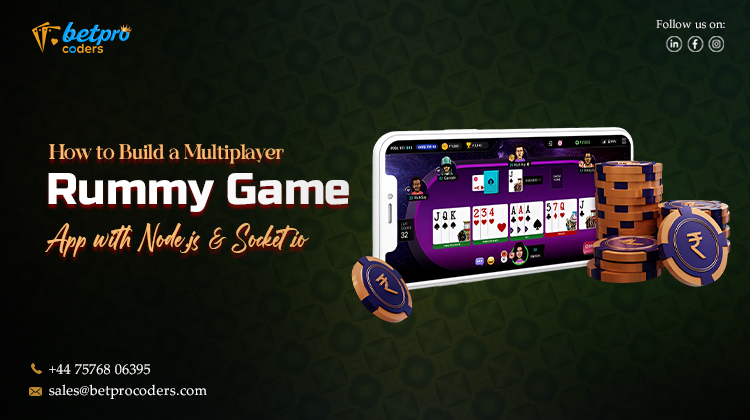
Rummy continues to dominate the online card gaming space, with millions of active players engaging on real-time multiplayer platforms. In 2026, multiplayer rummy game apps are boosting engagement through social interaction, live competition, and seamless cross-device gameplay. For startups building a rummy game platform, technologies like Node.js and Socket.io are key to delivering fast, scalable, low-latency multiplayer experiences.
Node.js ensures efficient backend performance for real-time multiplayer game development, while Socket.io enables instant, bidirectional communication for smooth gameplay such as card distribution, turn updates, and synchronized game states. Modern rummy game development also demands secure server-side logic, anti-cheat systems, and scalable architecture to support thousands of concurrent players. This guide explains how to build a production-ready online rummy game app using Node.js and Socket.io with a focus on performance and scalability.
What Is A Rummy Game?
Rummy is a popular card-matching game where players aim to form valid sets and sequences from 13 dealt cards. The main objective in rummy game rules is to minimize points by arranging cards into proper combinations and declaring before opponents. Over time, rummy has evolved from a traditional tabletop game into a widely played digital experience.
In 2026, online rummy game apps operate as real-time multiplayer platforms powered by technologies like Node.js, WebSockets, and cloud-based servers. Players can join live tables, compete globally, and enjoy multiple variants such as Point Rummy, Pool Rummy, and Deal Rummy. Modern rummy app development also includes features like AI-based matchmaking, anti-cheat systems, and performance tracking to ensure fair, fast, and engaging gameplay.
Read Also: Top 20 Rummy Game Development Companies in India 2026
Understanding Your Target Audience And Market
When you define your target users clearly, you make stronger decisions for rummy game development, multiplayer architecture, UX design, and monetization strategy. In 2026, user expectations for a rummy game app focus on speed, fairness, personalization, and social engagement. Understanding player behavior patterns before starting rummy game development improves retention and product-market fit.
Key Audience Segments:
1. Casual Gamers
Casual users prefer quick sessions, instant onboarding, and frictionless gameplay. Your multiplayer rummy game app should support fast load times, guest login, and smooth matchmaking. Push notifications, daily rewards, and lightweight UI improve engagement and retention in this segment.
2. Competitive Players
Competitive users expect structured tournaments, skill-based leaderboards, and high-performance real-time gameplay. A rummy game development company must prioritize secure game logic, anti-fraud systems, real-time synchronization, and accurate scoring engines. Stable backend architecture, low-latency Socket.io communication, and verified payment or reward systems build trust and long-term engagement.
3. Regional Language Users
Tier-2 and Tier-3 users drive massive growth in online rummy game development. These players prefer apps in their native language with localized UI, regional onboarding flows, and voice-based guidance. Avatar customization, culturally relevant themes, and multilingual support increase accessibility and adoption across diverse markets.
4. Social Gaming Enthusiasts
Social players focus on interaction, not just gameplay. A modern rummy app development strategy should include private tables, invite links, real-time chat, emojis, and friend-based competitions. Social features like clans, groups, and shared leaderboards increase session time and improve user retention in multiplayer environments.
Read Also: How To Develop An Incredible Card Game App like Rummy Circle
Why Choose Node.js and Socket.io for Multiplayer Rummy Game Development in 2026?
If you build a real-time multiplayer rummy game app, Node.js and Socket.io still dominate the architecture stack in 2026. These technologies power fast, scalable, and synchronized gameplay for modern rummy game development.
1. Real-Time Multiplayer Communication
Socket.io enables instant, bi-directional communication between client and server. Rummy gameplay depends on real-time updates for card distribution, turn management, timer sync, and score calculation. Every action reflects instantly across all players in a multiplayer rummy game app without delay.
2. Event-Driven, Non-Blocking Architecture
Node.js uses an event-driven, non-blocking model that handles thousands of concurrent users efficiently. This architecture supports real-time rummy tournaments, multiplayer tables, and high-traffic gaming rooms without performance drops.
3. High Performance with Low Resource Usage
Node.js and Socket.io deliver strong performance with minimal infrastructure overhead. You avoid heavy server loads and still maintain smooth gameplay, fast matchmaking, and stable real-time synchronization for online rummy game development.
4. Easy Integration with Modern Game Stacks
Node.js integrates smoothly with modern frontend frameworks like React, Next.js, Phaser.js, and Unity WebGL. Socket.io connects frontend and backend instantly, which simplifies real-time multiplayer rummy game architecture and reduces development complexity.
5. Cross-Platform Compatibility
Node.js and Socket.io work across Android, iOS, web browsers, and desktop environments. This ensures a consistent experience for all users in a cross-platform rummy game app, where gameplay, animations, and real-time updates stay fully synchronized.
6. Strong Ecosystem and Developer Support
The Node.js ecosystem in 2026 offers a massive collection of NPM packages, open-source tools, and active developer communities. You get ready-made solutions for authentication, matchmaking, security, and scaling, which speeds up rummy game app development and reduces time to market.
Read Also: Calculate the Rummy Game App Development Cost with Features
Steps to Build a Multiplayer Rummy Game App with Node.js & Socket.io (2026 Guide)
Building a multiplayer rummy game app with Node.js and Socket.io needs a structured real-time architecture, low-latency communication, and scalable backend design. Follow these updated 2026 steps to build a production-ready online rummy game app.
Step 1: Plan Rummy Game Architecture
Define your rummy game architecture before coding. Design core modules like matchmaking, game engine, scoring system, and real-time communication layer. Decide how players join tables, how the server deals cards, and how each round progresses. Use a server-authoritative model to control game state and prevent cheating in multiplayer rummy games.
Step 2: Design UI/UX for Rummy Game App
Create a clean and responsive rummy game UI/UX design using Figma or Adobe XD. Focus on fast interactions and mobile-first layouts. Design card animations, lobby screens, game tables, and user flows. A smooth rummy app interface improves retention and engagement in real-time multiplayer gameplay.
Step 3: Set Up Development Environment
Install Node.js, Express.js, and Socket.io for real-time communication. Use Redis for session handling and fast game state updates. Choose MongoDB or PostgreSQL for persistent data like user profiles, match history, and leaderboard tracking in your rummy game backend development setup.
Step 4: Build Game Engine and Backend Logic
Develop the rummy game engine with rules validation, card shuffling, and turn-based logic. Implement secure authentication and session management. Use Socket.io rooms for real-time gameplay synchronization. Handle events like join table, draw card, discard card, and declare win using a real-time multiplayer architecture.
Step 5: Develop Frontend for Multiplayer Rummy Game
Build the frontend using React, Vue, or Phaser for smooth rendering. Connect frontend with backend using Socket.io events. Update UI instantly for every move, including card distribution, timer updates, and opponent actions. A responsive multiplayer rummy frontend ensures seamless gameplay experience.
Step 6: Add Multiplayer Features and Fair Play System
Implement real-time matchmaking, private tables, and public rooms for flexible gameplay. Use a secure RNG (Random Number Generator) for card shuffling and server-side validation for every move. Add anti-collusion logic, fraud detection, and reconnect support to ensure fair play in online rummy game development.
Step 7: Test Multiplayer Rummy Game at Scale
Run load testing using tools like Artillery, JMeter, or k6 to simulate thousands of concurrent players. Perform stress testing for Socket.io connections, latency spikes, and game state synchronization. Add security testing to protect your rummy game app backend from exploits and API abuse.
Step 8: Deploy and Scale Rummy Game App
Deploy your multiplayer rummy game backend on AWS, Google Cloud, or Azure. Use Docker containers for portability and Kubernetes for scaling. Add NGINX as a reverse proxy and enable horizontal scaling to handle peak traffic in real-time rummy game servers.
Step 9: Marketing and Monetization Strategy
Use ASO (App Store Optimization) and SEO to increase visibility for your rummy game app. Run referral programs, daily challenges, and engagement rewards to increase retention. Monetize through in-app purchases, ads, subscriptions, or non-stake tournament models depending on your market and compliance requirements in 2026.

Technical Foundations for Building a Multiplayer Rummy Game
A successful multiplayer rummy game development stack depends on real-time performance, scalability, and low-latency communication. Every technology layer must support fast gameplay, secure sessions, and smooth user experience for real-time rummy game apps.
1. Node.js (Real-Time Game Server):
Node.js powers the backend of a multiplayer rummy game app with an event-driven, non-blocking architecture. It handles thousands of concurrent players, multiple game tables, and real-time actions without performance drops. Node.js supports high-performance rummy game backend development, fast API responses, and stable session handling for large-scale online rummy platforms.
2. Socket.io (Real-Time WebSocket Communication):
Socket.io enables bidirectional communication between players and the server. It manages real-time events such as card distribution, turn-based gameplay, timer updates, and live chat. Socket.io improves real-time multiplayer rummy synchronization, reduces latency, and ensures consistent game state across all connected devices in a rummy game app development environment.
3. MongoDB (Game Data Storage):
MongoDB stores user profiles, game history, leaderboards, and transaction logs in a flexible schema. It supports fast iteration for rummy game feature expansion like tournaments, avatars, and regional leaderboards. MongoDB fits well in scalable rummy game architecture where data structures evolve with new gameplay features and engagement systems.
4. Redis (Real-Time Cache and Session Management):
Redis manages live game sessions, matchmaking queues, and frequently accessed gameplay data. It supports pub/sub communication between distributed Node.js servers. Redis improves low-latency rummy game performance, enables fast reconnection, and stabilizes real-time multiplayer rummy game sessions under heavy traffic.
5. Frontend Stack:
React.js and Vue.js build responsive UI components for rummy game apps with smooth state updates and fast rendering. Phaser.js handles advanced animations like card movement, shuffle effects, and drag-and-drop interactions. A strong frontend improves user engagement in online rummy games, enhances gameplay clarity, and delivers a smooth mobile-first experience.
6. Docker + Kubernetes:
Docker packages the rummy game application into portable containers for consistent deployment across environments. Kubernetes manages scaling, load balancing, auto-recovery, and server health monitoring. This setup supports cloud-native rummy game development, allowing platforms to scale instantly during peak traffic and maintain stable performance for large multiplayer rummy ecosystems.
Challenges and Advanced Solutions in Multiplayer Rummy Game Development
Building a real-time multiplayer rummy game app in 2026 requires solving key issues like latency, fairness, scalability, and secure state management. Modern rummy game development must ensure smooth gameplay even under high concurrency.
Real-Time Sync Issues in Multiplayer Rummy:
- Challenge: Network lag, delayed turns, and duplicate actions affect real-time gameplay.
- Solution: Use Socket.io real-time events with server-side acknowledgements. Apply server timestamps and client-side prediction with state reconciliation to ensure smooth multiplayer rummy gameplay.
Player Disconnection and Session Loss:
- Challenge: Sudden disconnects interrupt active rummy tables.
- Solution: Implement a 30–60 second reconnection window. Store session state in Redis and restore instantly. Replace inactive players with AI bots after timeout to keep the game running.
Cheating Prevention and Card Security:
- Challenge: Card prediction and manipulation reduce trust in rummy platforms.
- Solution: Use server-side card shuffling and dealing with a secure RNG. Apply HMAC-based verification and maintain audit logs to ensure fair rummy gameplay and transparency.
Scaling Multiplayer Rummy for High Traffic:
- Challenge: Handling thousands of concurrent players across tables.
- Solution: Use Redis for game state, Node.js microservices, and Kubernetes for scaling. Enable Redis Pub/Sub for real-time sync across servers to support large-scale multiplayer rummy apps efficiently.
For Free Consultation
Contact Number: +447576806395
Email: [email protected]
Future Trends of Rummy Game App Development (Node.js & Socket.io, 2026 Update)
The future of multiplayer rummy game app development focuses on speed, intelligence, and real-time social gameplay. Node.js and Socket.io continue to power scalable, low-latency rummy platforms.
1. AI Bots & Smart Matchmaking in Rummy Apps
Use AI in rummy game development to analyze player behavior and skill level. Build intelligent matchmaking systems with Elo and dynamic rating models. AI bots fill empty tables, support practice mode, and improve fairness in real-time multiplayer rummy games.
2. Voice & Video Chat for Social Rummy Games
Integrate WebRTC voice and video chat in rummy apps for real-time interaction. Players communicate in private rooms and friend matches. Add moderation tools, noise control, and reporting systems to protect user safety and improve social gaming experience.
3. AR-Based Rummy Gameplay Experience
Use ARCore and ARKit to create immersive augmented reality rummy games. Players view virtual card tables on real surfaces, interact with 3D cards, and use gesture-based controls. This improves engagement in next-gen mobile rummy game apps.
4. Blockchain Use Cases in Rummy Game Apps
Apply blockchain in gaming for secure asset tracking and transparent transactions. Smart contracts manage in-game rewards and digital assets. Crypto wallets support global access and secure ownership in decentralized rummy platforms.
Conclusion
Building a multiplayer rummy game app with Node.js and Socket.io delivers real-time gameplay, strong backend logic, engaging UI/UX, and scalable revenue models. Every layer matters, from rummy game architecture design to performance tuning under high concurrency and real-time load handling in 2026 multiplayer game development environments.
If you need a reliable partner, BetPro Coders stands as a trusted rummy game development company offering end-to-end services, including online multiplayer rummy engine development, real-time analytics, scalable backend systems, and compliance-ready game solutions for modern rummy app development needs.
FAQ’s
1. Which frontend framework is best for real-time rummy game development?
Answer: React (UI) and Phaser.js (game rendering) work best with Socket.io for smooth real-time multiplayer rummy game apps.
2. How do I handle disconnection in a multiplayer rummy game?
Answer: Use Socket.io reconnection with Redis session storage so players can rejoin the same rummy game room without losing progress.
3. What is the best scalable architecture for a rummy game in 2026?
Answer: A microservices-based architecture using Node.js, Redis, Docker, Kubernetes, and load balancers ensures scalable multiplayer rummy game development.
4. How does Socket.io enable real-time rummy gameplay?
Answer: It maintains persistent WebSocket connections for instant updates like moves, card distribution, and game state sync in a real-time rummy app.
5. Which database is best for a rummy game backend?
Answer: MongoDB (game data), Redis (real-time state), and PostgreSQL (history & analytics) together form a strong rummy game backend stack.
6. How are rooms managed in Socket.io for rummy games?
Answer: Use socket.join(roomId) for grouping players and socket.to(roomId).emit() for broadcasting real-time game updates.
7. Is Node.js still good for rummy game development in 2026?
Answer: Yes. Node.js is ideal for real-time multiplayer rummy games due to its event-driven, low-latency architecture and WebSocket support.
8. How is scoring handled in a rummy game app?
Answer: A server-side rummy rule engine validates sequences and sets, then calculates scores to ensure fair and cheat-proof gameplay.
9. What are the monetization models for rummy apps in 2026?
Answer: Common rummy monetization models include ads, subscriptions, in-app purchases, and regulated tournament-based formats.
10. What are common mistakes in rummy game development?
Answer: Weak security, poor reconnection handling, lack of Redis state management, and insufficient load testing for high-traffic multiplayer rummy apps.



Leave a comment